
Space Valves: Leak Testing, Optimized for Today’s Aerospace Industry
The industry is expected to experience even more significant growth, with the reusable rocket market surpassing $50 billion in investment in just the next few years. “Market projections suggest that the reusable rocket market alone could exceed $50 billion by 2030. This growth is attracting investment from venture capital, private equity, and governments worldwide,” reports The Science Times.
Challenge
Keeping up in today’s space race
For engineers in aerospace, this growth opportunity comes with standards and deadlines that can often be unforgiving. Timelines are always tight in the space community. “We need things yesterday,” jokes Kyle Meeuwsen, lead engineer and founder of Space Valves, an aerospace components supplier.
He founded Space Valves because of the growing need in aerospace for components that are delivered quickly and can perform without question. “The supply chain’s been the biggest issue and concern,” says Kyle, whose experience as a propulsion engineer at Blue Origin helped shape his perspective on aerospace manufacturing.
Launch timelines are dependent on a number of factors lining up, and on the performance of every component. Even the most basic element can impact the success — or failure — of a launch. Recall the delay of Boeing Starliner’s first manned launch, which was removed from the launch pad just two hours before scheduled liftoff: an oxygen relief valve was “buzzing,” and needed replacement in the upper stage of Atlas V’s Centaur.
Reusing rocket parts creates more opportunity in the industry, making missions more affordable and sustainable. “Today, reusable rocket technology is transforming how the world accesses space, slashing costs and opening possibilities once considered impossible,” explains Renz Soliman with The Science Times.
But those rocket parts still require rigorous testing, and some components will not stand up to repeated use. “Those valves were designed with things like stainless housings that couldn’t be used on high pressure gaseous oxygen systems,” he explains. “They didn’t have isolated components, so the internals would wear out as these valves were reused over extended periods of time.”
Options
Aerospace moves too quickly for bubble counts
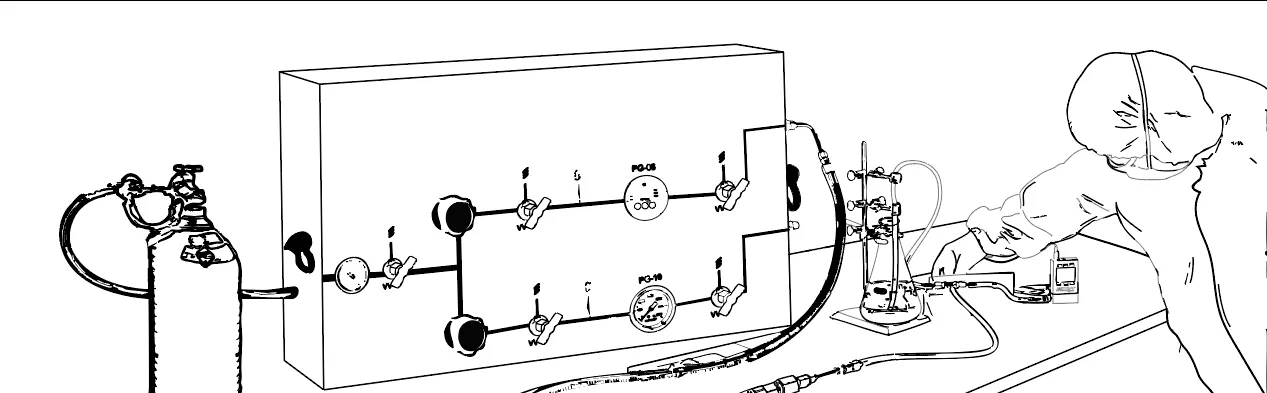
In standard leak testing applications, the data collection processes can be cumbersome and time-consuming. “For a NASA-approved leak test, techs are spending valuable time on these processes: about five to ten minutes per valve in normal practice, with one to three minutes of actual bubble observation,” explains Mike Owen with Alicat®. “That kind of downtime, and the risk of inaccuracy, is not negligible.”
“We not only need to be cheaper and faster and higher performing, but we also need to provide better data to our customers.”
Kyle Meeuwsen, Space Valves
Common leak testing methods, like bubble counts or pressure decay tests, can not only slow down the production process, but also come with risks to accuracy. Kyle with Space Valves explains: “There’s a number of suppliers out there, where they’re doing bubble counts for leakage, and I just don’t think that that cuts it,” says Kyle. “As a startup in the aerospace community, we not only need to be cheaper and faster and higher performing, but we also need to provide better data to our customers.”
Space Valves wanted to give their customers in aerospace a high-performing component, and data to validate that performance. “I got to jump in with newly designed hardware that wasn’t stuck with some sort of heritage configuration,” Kyle explains. They needed a faster, repeatable option for measuring flow in their leak testing application, one that improved traditional test stand designs.
Selection
Aerospace leak testing with an Alicat mass flow meter
He integrated Alicat’s laminar differential mass flow meter into his leak testing stand at Space Valves: “We take the outputs, feed them back into our manufacturing process, and make sure that we iterate to provide the highest performing and highest quality valve possible,” explains Kyle. Kyle’s team is able to speed up their validation test procedure time by 90%, compared to other testing methods.
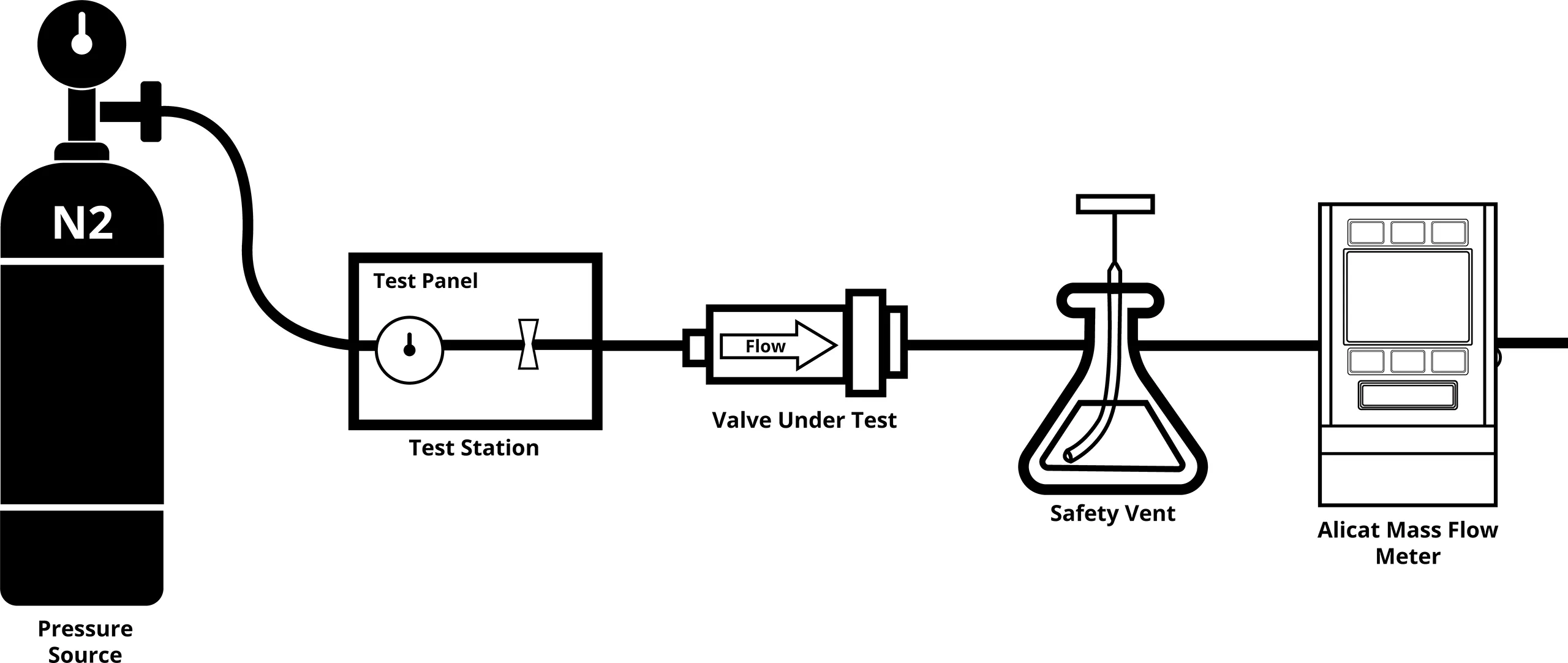
Through the use of Alicat’s mass flow meter, Space Valves can fulfill the promise of rapid delivery and precision verification on its components. “At the end of the day, the customer gets a very high performing valve,” explains Kyle. He expects to see more demands for performance data from his customers, who want data packages from Space Valves. “That’s very important to our customers who are now looking at longevity for their vehicles and reusability and rapid turnaround times.”
Outcomes
High performing components for flight-critical operations in aerospace
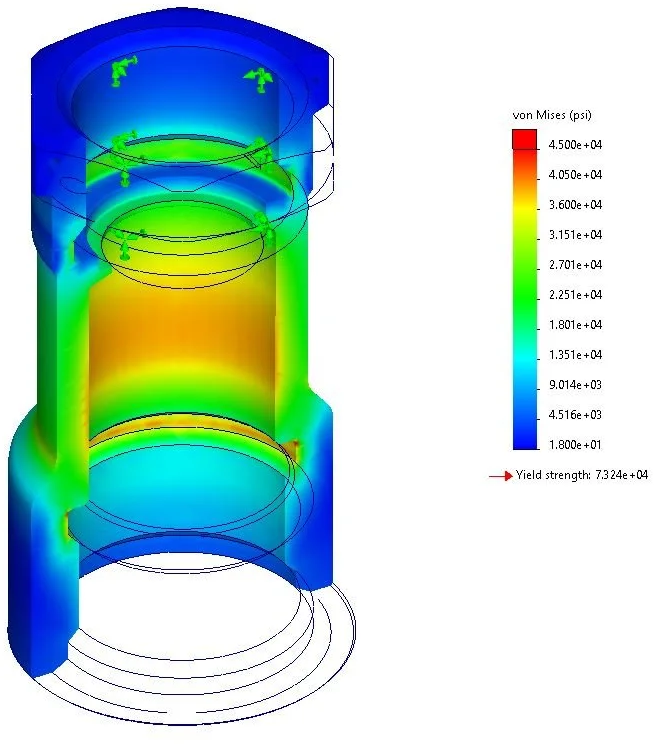
More than a dozen launches are scheduled in August of 2026 in the aerospace community — a pace that has increased since the commercialization of space flight missions. “If [their] ancillary components and valves don’t need to be replaced after every mission, that allows our customers to keep up the pace and keep up the launch cadence,” says Kyle. Today, Space Valves components can be found on lunar spacecraft, upper stage, and main stage engines.
With Alicat meters in its leak testing stand, Space Valves tests components quickly and with confidence:
- Accuracy as good as ± 0.5% of reading
- 98+ standard pre‑calibrated gas choices, which can be switched without losing accuracy or recalibration
- ± (0.1% of reading + 0.02% of full scale) repeatability
- Transmittable performance and validation data logs
There is an industry wide demand for sustainable processes in aerospace, especially since the number of launches is growing year after year. “Today, landing a rocket booster is unremarkable in aerospace circles,” writes Renz Soliman with The Science Times. “SpaceX completes hundreds of successful landings annually. This normalization of reusability represents perhaps the most significant shift in spaceflight since rockets first lifted humans beyond Earth’s atmosphere.”
Companies like Space Valves are guaranteeing the future of spaceflight by delivering reliable, high-performance components. By integrating a flow control and data monitoring solution, and using an Alicat mass flow control meter, Space Valves can deliver those components with confidence and speed.