
CSA, ATEX and DEKRA certification details for Alicat products designed for hazardous gas zones
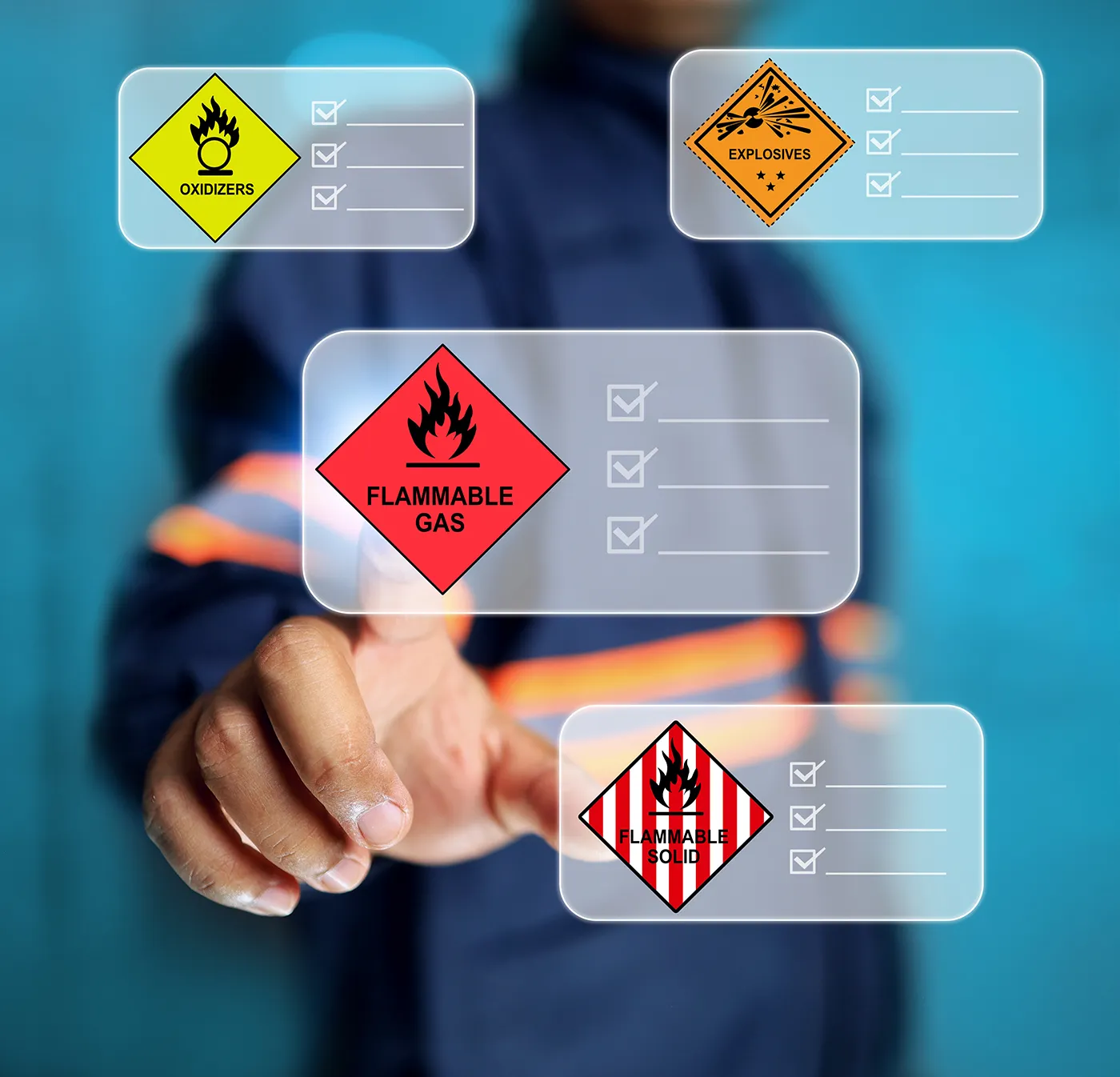
Choosing instrumentation for a hazardous gas zone means balancing safety requirements with practical process needs. Alicat has flow and pressure measurement and control solutions that meet safety requirements zones while improving process data. Whether explosive hazardous gases are continuously present, or an occasional risk in the installation area, Alicat -X and intrinsically safe product builds hold certifications through CSA, ATEX, DEKRA, and/or IEC to meet quality and safety standards such as Class I Division 1, Division 2, ATEX Zones 0,1, 2, or Ex. Here is a breakdown of which build options and models are certified for each hazardous gas designation.
Pressure and flow instruments with -X configuration
Most Alicat devices can be built to perform safely in areas where explosive gases are a potential risk, such as Class I Division 2, or ATEX Zone 2 areas. These instruments, which are commonly referred to as “-X” device builds, are certified by CSA for use in North America and the E.U. M/MC and MW/MCW mass flow instruments, P/PC pressure instruments, and L/LC liquid flow instruments all can be built with -X specifications for C1D2.
Class I Division 2 and ATEX Zone 2 Certification details
Alicat CSA/ATEX classification
Class 1, Zone 2 AEx ec IIC T4 Gc
Class I, Division 2, Group A, B, C and D, T4
−40°C ≤ Ta ≤ +60°C
CSA certification for North America: Class I, Division 2, Group A, B, C and D, T4
CSA certification for EU: ATEX Class 1, Zone 2 AEx ec IIC T4 Gc
Intrinsically safe pressure and flow instruments
Class I Division 1 and ATEX Zone 0 Certification details
DEKRA Certification for North America: Class I, Division 1, Groups ABCD T4, Ex ia
DEKRA Certification for EU: ATEX Class I, Zone 0 AEx ia IIC T4 Ga
IEC certification from DEKRA for international use:
Certification markings and definitions
North American CSA classes and divisions
A CSA certification has both a class and division. This classification is commonly used in North America.
- The class indicates the type of hazardous compound.
- The division indicates the likelihood of the hazard.
The Class I, Division 2, Group A, B, C and D, T4 classification indicates a device is safe for use with gases, vapors, and liquids in an environment where a hazard is likely. Specific operating conditions are further defined by the group (A, B, C, D) and temperature class (T4).
ATEX zones and equipment categories
An ATEX certification has a group and zone/category. This classification is used in most countries outside North America.
- As above, the class indicates the type of hazardous compound.
- Certifications are split into groups for either mining (Group I) or all other industrial applications (Group II).
- The zone represents the likelihood of a potentially explosive atmosphere occurring for gases, mists, and vapors (0, 1, or 2) and is associated with an equipment category (1, 2, or 3).
The Class I, Division 2, Group A, B, C and D, T4 classification indicates a device is safe for use with gases, vapors, and liquids in an environment where a hazard is likely. Specific operating conditions are further defined by the group (A, B, C, D) and temperature class (T4).
*Visit the European Commission website for detailed information on ATEX certifications.
Not sure what works best?
Need help choosing the right flow or pressure instrument for your hazardous zone application?