Alicat mass flow controllers resist back pressure contamination
Evaluation of Alicat mass flow controllers’ resistance to back pressure contamination
Experimental setup
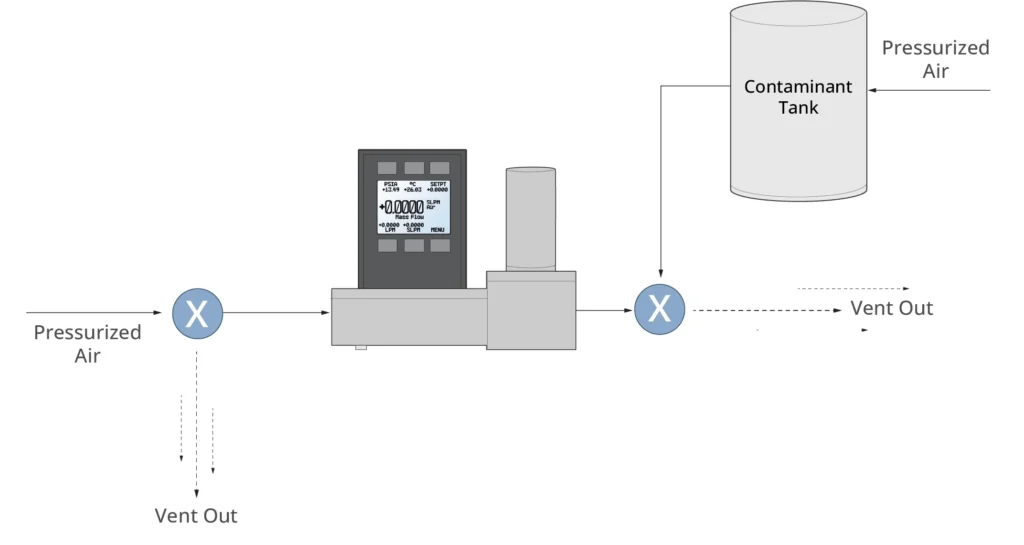
Figure 1. Schematic of experimental setup. Blue circles represent 3-way valves; DUT = device under test.
To simulate the conditions under which the unit might be contaminated, we created and installed a pressurized foam contaminant tank downstream of the MFC (see Figure 1). Foam was made using a mixture of yeast, 3% hydrogen peroxide solution, and dish soap – simulating a biological contaminant. An Alicat Bio-Series2 1 SLPM mass flow controller was used for the test. This series uses materials compliant with ASME BPE-2016 standards3, and includes additional features to facilitate use in a bioprocessing environment. Its performance under these conditions should be representative of other Alicat MFCs as well. Foam was generated and the contaminant tank was pressurized to 40 PSIG, 60 PSIG, and 80 PSIG. 12.45 mL of the foam solution was repeatedly introduced into the MFC at various pressures; accuracy and control ability were then measured at 16 ± 1 minutes after each contamination event.
Results
The Alicat MFC was surprisingly resistant to contamination from watery foam. Anecdotal reports had indicated that the unit would likely respond poorly to even slight contamination events. Loss of accuracy and control due to contamination with process fluids is common with thermal-based MFCs1. However, despite repeated contamination events, the Alicat MFC continued to perform within normal operating parameters.
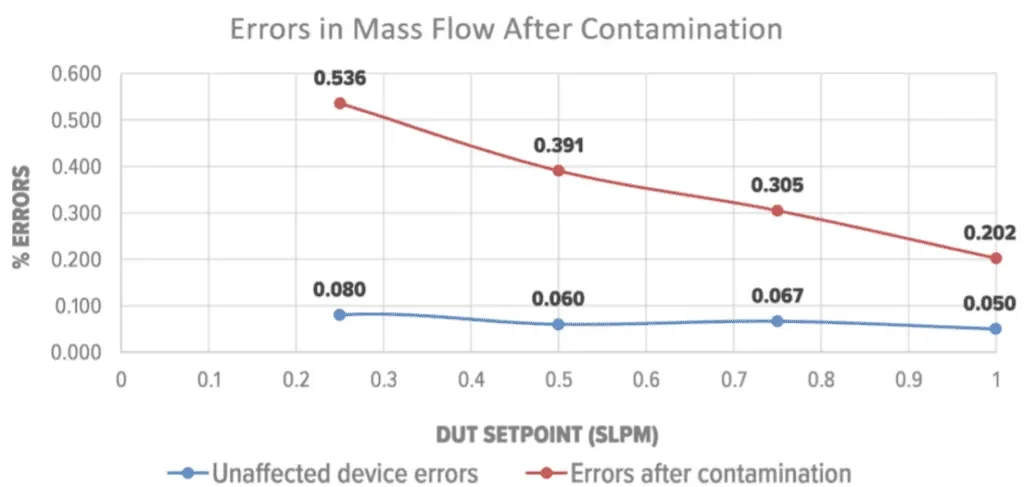
For each set of experiments, we measured the mass flow that the unit was controlling to (in SLPM), as well as the valve drive percentage of scale used (see Figures 2 and 3). Prior to each contamination, measurement accuracy was verified by comparison with a Molbloc standard4,5. The percentage errors before and after contamination are shown in Figure 4. We observed much higher errors after contamination than in the original state; however, the absolute magnitude of the errors is still less than 1% of the reading. The errors after contamination decrease linearly with the mass flow rate setpoints, which may be an indication of a small blockage caused by the contamination. The errors are reduced by approximately half once the device is purged with isopropyl alcohol and subjected to vacuum, to dissolve any residue left behind from the foam and to evaporate the alcohol remaining inside the device.
After both sets of tests were completed, we tested the device to failure by repeatedly flooding it with partially foamy water, in excess of 100 mL, until the foam reached the flow meter and was detected upstream of it. After repeated attempts to induce failure, the device was still functional, but began controlling erroneously.
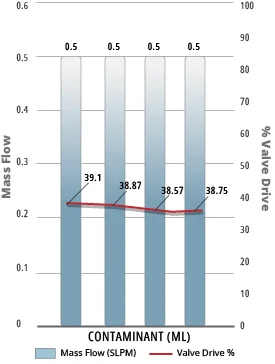
Figure 2. Valve drive percentage and mass flow (SLPM) at 22 psig input pressure.
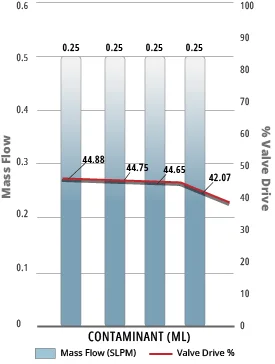
Figure 3. Valve drive percentage and mass flow (SLPM) at 73 psig input pressure.