
Chemical Synthesis With Intrinsically Safe Hydrogen Flow Control
Chemical synthesis and hydrogen
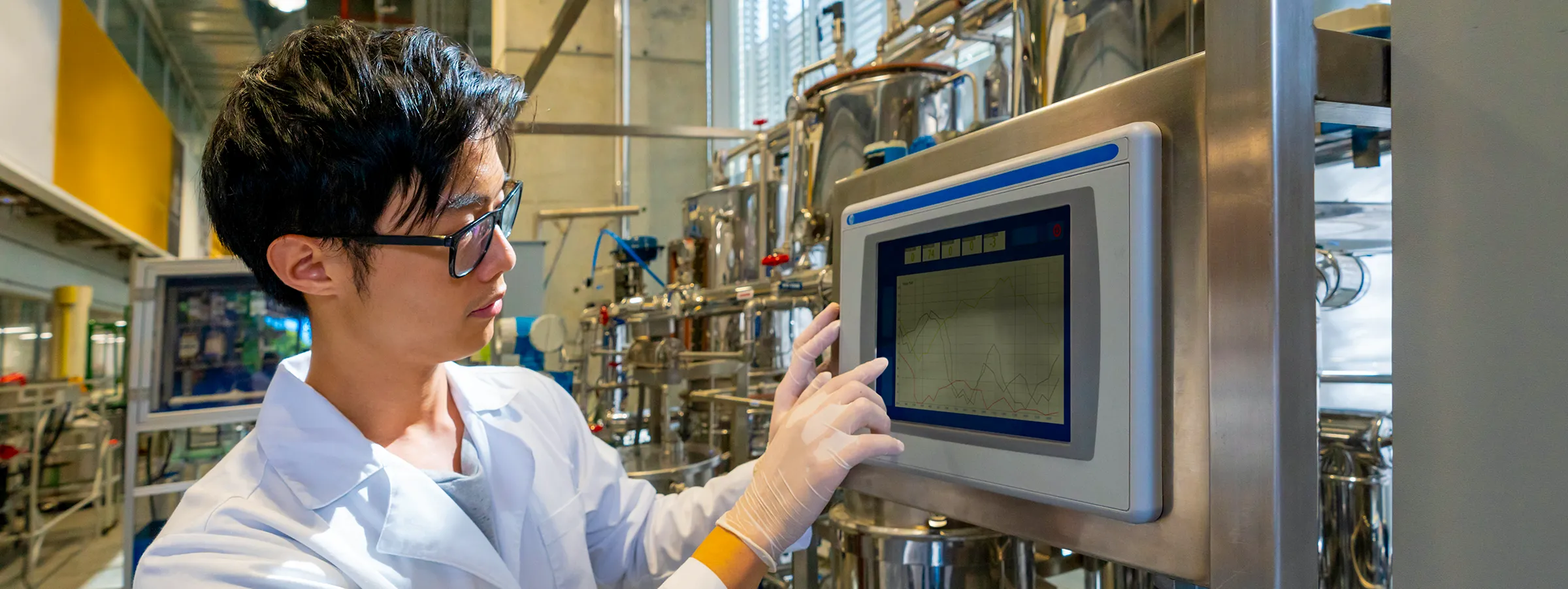
Hydrogen plays a central role in chemical synthesis, supporting reactions such as hydrogenation, reduction, and carbon–nitrogen bond formation. It is often produced through large-scale operations like steam cracking or reforming, then purified for use in downstream synthesis and pharmaceutical processes. In many instances, hydrogen flow directly influences how fast chemical reactions occur and the resulting products that form. Therefore, maintaining precise control is essential to stable operation, consistent product quality, and safe handling.
Challenge
Hydrogen flow control in a hazardous location
- Continuous-flow systems demanded tighter control.
Maintaining a constant feed of reactants meant the reaction operated in steady state, so even small deviations in hydrogen flow or pressure could unbalance stoichiometry. These shifts could affect catalyst performance and introduce errors into online measurement. - Working with hydrogen raised safety concerns.
Safe control of hydrogen required certain material and process considerations. With hydrogen’s 4% LEL (lower explosive limit) and high potential for gas accumulation, concerns were raised about the setup’s compact reactor designs, higher temperatures, and use of multiple on-line sensors. Integrators were searching for a solution that would reduce leak-points and meet the material needs of flowing hydrogen. - CID1 hazardous location made options limited.
The Class I, Division 1 hazardous location significantly limited the available options. Because hydrogen was continuously present, the process fell under strict safety standards that governed every component installed in the area. To comply with CID1 requirements, the integrator needed a solution that allowed their instrumentation to operate safely and efficiently within the classified zone
Options
Hydrogen process control solutions with drawbacks
Mechanical regulators and needle valves
- Upside: Low-cost, simple hardware that’s easy to install.
- Downside: manual options weren’t accurate enough to ensure repeatability between tests.
Explosion-proof housings and electronic controllers
- Upside: Better accuracy and control than manual valves, with some options for data logging and visibility.
- Downside: Require sealed housings, adding bulk to the system and lengthening maintenance interrupts.
Orifice plates or critical flow restrictors
- Upside: Extremely simple and low-maintenance.
- Downside: Only provide fixed flow rates—no dynamic control or compensation for pressure/temperature changes.
- Downside: Poor option for any application requiring repeatable cycling or varying test conditions.
When considering their full set of requirements, the integrator needed a solution that could deliver accurate and responsive hydrogen control without adding bulk, complexity, or maintenance burdens. The final solution also needed to integrate seamlessly with their existing automation and analysis system while meeting strict hazardous-location certification standards.
Selection
Responsive, self-contained, and digital hydrogen flow controller
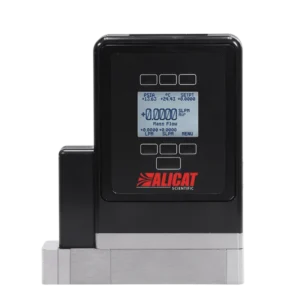
In their search, the team found the Alicat Scientific IS-Max™ intrinsically safe mass flow controller (ISMC). Certified under ATEX, IECEx, and North American standards, the ISMC is the first integrated digital flow controller approved for installation in environments where flammable gases like hydrogen present an explosion risk. This eliminated their previous issues with the purge box, didn’t require an explosion-proof cabinet, and satisfied the certification requirement.
The controller was configured for 6 SLPM of hydrogen, 1 bar g inlet, and vacuum at the outlet. The temperature fell neatly within its operating range of −10 °C to 60 °C, ensuring measurement would remain viable. Because of the device’s digital and analog (4 – 20 mA) communication options, it was able to integrate with the preexisting automation and analysis systems.
The IS-Max’s ability to totalize the flow of H2, alongside reporting 12 additional parameters—including flow, pressure, and relative humidity—provided researchers with critical data for their operation.
Outcomes
More repeatable chemical balance, data collection, and automation as bonuses
Once integrated, the IS‑Max mass flow controller maintained a steady and precise hydrogen feed across each reactor channel. This stable flow kept reaction balance accurate, allowing each catalyst bed to run under identical conditions. As a result, any performance differences could be attributed to the chemistry itself rather than to fluctuations in gas delivery. Automated online analysis confirmed consistent conversion and yield across repeated runs, demonstrating that the intrinsically safe control architecture provided both the precision and repeatability the process required.
Because the controller was mounted ‘bare’ in the classified area, the team avoided the added bulk and maintenance demands of an explosion-proof cabinet—no heavy bolted housings to open during calibration, no long shutdowns while the system cooled or was re-sealed, and no extra wiring runs to route around the enclosure. This reduced turnaround time between tests and kept uptime high.
The integrator’s result was a fully automated hydrogen-flow platform that met stringent safety requirements while preserving the analytical accuracy and reproducibility needed for reliable reactor testing.
Value Gained
- Totalizing and rich data – 13 reported parameters provided more data than any other option
- Fewer leak paths – reduced interfaces minimized hydrogen accumulation risk
- Consistent stoichiometry – stable, accurate hydrogen flow preserved reaction balance and product yield
- Automation – analog and serial outputs integrated easily with PLCs and analysis system
- Reduced cost and maintenance – fewer components and less certification complexity